Virginia Tech Positional Previews: Could RB be the strength of the offense?
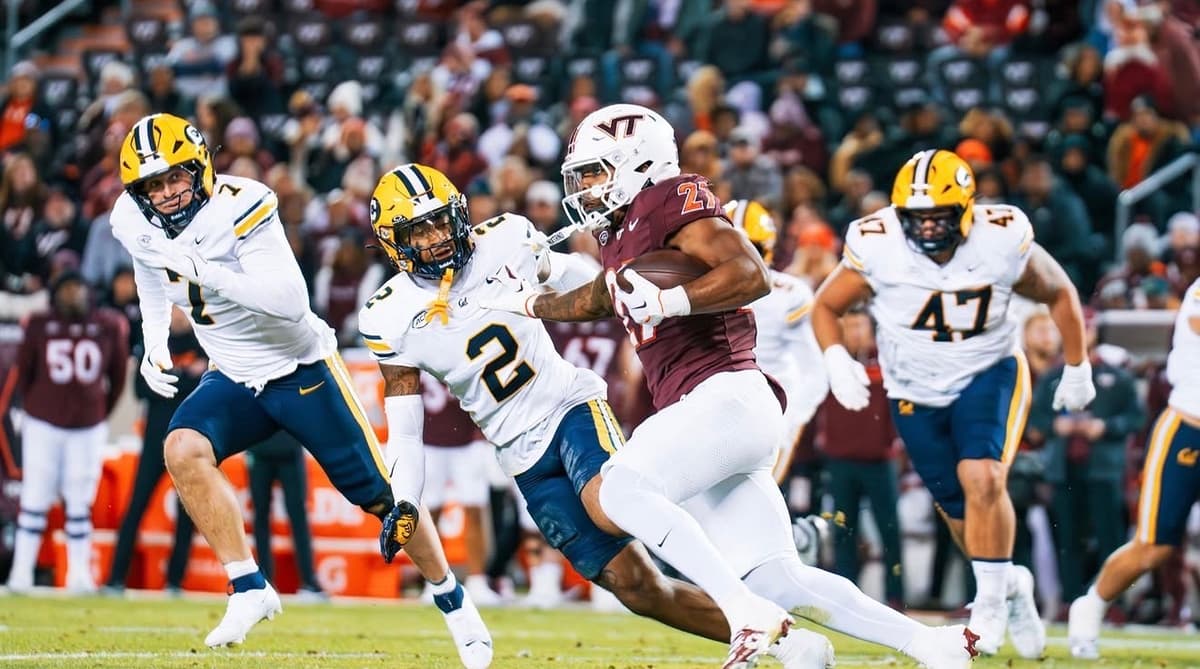
During his time at both Vanderbilt and Penn State, James Franklin had a knack for identifying and developing great running back talent. In total, Franklin has coached five backs who were eventually drafted into the NFL. In April, Kaytron Allen and Nick Singleton became the latest Franklin products to enter the league. They join the likes of Zac Stacy, Miles Sanders, and most notably, Saquon Barkley.

Even though Franklin will don a new team’s logo this season, he will still have a strong stable of running backs at his disposal. Unlike many positions on the roster, where Franklin and his staff had to boost the talent through the transfer portal, the running back room will be headlined by two players with experience in the maroon and orange. After those top two, however, there are question marks about depth. Injuries this spring made evaluating the running backs even more difficult, meaning it could take well into fall camp for the depth chart to shake itself out. Running Backs Coach Norval McKenzie says ideally, he’d like to be able to rotate two or three backs this Fall, leaving the door open for some younger guys to earn reps.
The running back room has the potential to be the strongest position group on the offense this season, so let’s take a closer look at the backs that will have the biggest impact on the Hokies’ success.
Jeff Overton
Overton suffered an injury while practicing with the Hokies ahead of the 2024 Belk Bowl, and that injury caused him to miss the first eight games of 2025 as well. When Overton finally did make his debut, he provided a spark to an often-dormant Virginia Tech offense. While his production was still limited, he flashed his big-play ability as a runner and a receiver, highlighted by a 36-yard reception against Florida State and a touchdown against Miami. Now, Overton has had a full, healthy offseason to improve his game and his body to handle the expected increased workload this season. During spring ball, James Franklin said that he could see why returning coaches were so excited about Overton and that he was able to “separate” himself from the rest of the running backs in practice. While that may be in part due to the injuries at the position, it’s clear that the offense will heavily feature Overton in both the running and passing schemes.
 Sons of Saturday Virginia Tech
@SonsofSatVT
CJF says one RB has started to separate from the pack👀:

Running Backs Coach Norval McKenzie says that Jeff has added 18 lbs of muscle, while maintaining the speed and agility that make him a home-run threat out of the backfield. Franklin added that Overton has the chance to weigh in at 210 lbs come the Fall, a massive jump after playing at around 185 last season. McKenzie also emphasized that Overton made significant progress in the film room this offseason and separated himself through his competitiveness, work ethic, and production during the spring. Overton’s bulk in size, pure talent, and increased productivity over the offseason put him in a great position to be the bell-cow of the Virginia Tech offense, and his receiving ability allows him to be an every-down back. It would not surprise me by the end of the season if Overton is the focal point of Ty Howle’s attack, especially if Ethan Grunkemeyer is named the starting quarterback. While Grunkemeyer certainly possesses the ability to scramble, he is not known as a running threat. This will put more of the onus on the backs to carry the load in the run game, which Overton certainly seems prepared to do if called upon.
Marcellous Hawkins
This time last year, much of Hokie Nation may not have been familiar with Marcellous Hawkins. He was an under-the-radar transfer from Central Missouri, a Division II school. Many thought that Hawkins would have a minimal role in the Hokies offense behind Bowling Green transfer Terion Stewart, who many had slated to be the bellcow successor to Bhayshul Tuten in the Hokies backfield. However, Stewart struggled with injuries throughout last season, opening the door for Hawkins to become the feature back of the offense. Marcellous took full advantage of his workload, racking up 749 yards on just 118 carries, good for an average of 6.3 yards per touch. Hawkins also put up two 100-yard rushing performances and found the end zone twice in 2025.
Marcellous Hawkins is the definition of a power back, standing 5-10 and weighing in around 225 pounds. That size was used to punish defenders who got in his way last season, as Hawkins forced 44 missed tackles and gained 562 yards after contact. Now, after being previously unknown by the average fan, Hawkins finds himself as the elder statesman of the Virginia Tech running back room, with high expectations for 2026. Coach McKenzie called him a “natural leader” and someone with an infectious personality. That leadership was on full display when the media was allowed to watch a weight room session this spring. Hawkins was walking around to every rack, encouraging and supporting his teammates.
 Sons of Saturday Virginia Tech
@SonsofSatVT
McKenzie on Marcellous Hawkins and the leadership he brings to the team:

Unfortunately, Hawkins was limited during spring ball, only able to compete in individual drills with no contact. Despite that, Coach Franklin and Coach McKenzie were impressed by what they were able to see out of Hawkins. Again, McKenzie says he wants to roll two or three backs on Saturdays, so Hawkins should see plenty of production, especially in short-yardage situations and on the goal line. However, McKenzie says he’s also looking for someone “to come out of the pack, and be deemed that guy,” so the competition between Overton and Hawkins for the feature back role will be an interesting one to watch as we head into the season.
Bill Davis
While Franklin and McKenzie appear to have a lot of confidence in their top two running backs, there are some major questions as we move down the depth chart. Unfortunately, injuries at the position are common, so it’s important to have a stable of guys ready to step up if one of the top backs goes down. The Hokies are still waiting on that third back to emerge. In the Spring Game, Overton had a nice day, with five rushes for 32 yards, but with Hawkins not suiting up, the other five backs who saw action combined for just 63 yards on the ground. Franklin will need to see more from the next crop of backs to feel confident about the depth at the position, something he is trying to improve across the roster.
One of the guys the Hokies are counting on to step up is Louisiana transfer Bill Davis. Over his last two seasons for the Ragin’ Cajuns, Davis tallied almost 1,600 rushing yards and 15 touchdowns in 27 appearances. This experience should have allowed him to have a big spring with the Hokies, especially with more reps being available due to injuries, but Franklin said that, despite some flashes, Davis just was not as consistent as they wanted him to be. Davis projects to be another power back option for the Hokies, standing at 5-9, 230 lbs. With the relative youth and inexperience across the rest of the room, Davis will get a prime opportunity to start the season as the third running back, but we will see if he’s able to hold that spot over the talented youngsters behind him.
Messiah Mickens
One of those talented young players is Messiah Mickens, a true freshman who was Virginia Tech’s second-highest-rated recruit in the 2026 class. Mickens certainly already possesses the size to contribute early to the Hokies' offense, coming in at 5-10, 212 lbs. Unfortunately, Mickens missed out on valuable reps during the spring, missing the entirety of camp due to injury. His lack of experience and practice reps might make it hard for him to find the field early in the season, but he certainly fits the mold of the type of depth Franklin is looking for at each position. Franklin has repeatedly emphasized that he wants a strong top two at each position, and then a third guy that you are developing behind them. Mickens comes in with lots of high school production as a nearly 4,000-yard career rusher. Mickens can also contribute in the receiving game, as he averaged more than 13 yards per catch with six touchdowns in his high school career. Mickens projects to be an eventual three-down back for the Hokies, but he may not be able to contribute early this season until he gets some more practice reps under his belt.
Tyler Mason
The final Hokie running back that I think has a chance to contribute this season is redshirt sophomore Tyler Mason. Mason has only appeared in seven games across his two seasons in Blacksburg, racking up just 13 carries for 59 yards. However, Mason has caught the eye of the coaching staff a couple of times in his career. During Spring Ball in 2025, Brent Pry said that Mason has “the ability to kind of slide and make an outside cut look really easy, and we saw some of that today from him.” Mason is smaller than some of the other backs on the roster, weighing in at 211 lbs. His smaller frame and basketball experience from high school make him more of a scat-back, and could give him the ability to provide a nice change of pace for the Hokies’ offense from the downhill, bruiser backs like Hawkins and Davis. Mason also has the potential to contribute on special teams, with some limited kick return experience last season.

Virginia Tech’s offense appears likely to lean heavily on the run game this season. No matter who wins the starting quarterback job, the Hokies will have a young and inexperienced signal-caller, necessitating a strong run game to take some of the pressure off the passing offense and maintain a balanced attack. Howle’s prior coaching experience as a tight ends and offensive line coach also suggests that the Hokies will feature a run-heavy attack, as does the success that James Franklin’s offenses have had running the football in the past. Last season, the Hokies ran the ball effectively, ranking 30th in yards per game. To match and surpass that success this season, the Hokies will need to pair their talented running backs with an improved offensive line and a more potent passing attack to keep defenses from loading the box to stop the run.