
 L 22-40 vs Stanford
Two Things Can Be True
Virginia Tech’s problems are real. The promise of the rebuild is, too.
Social media wasn’t around in 1992. If you wanted to express your opinions about your favorite team, you’d have to buy a ticket to a game, corner some poor guy at the Jiffy Lube, or perhaps call the coach’s 11-year-old daughter and yell at her about how bad a coach her dad was.
The latter did infamously happen when Casey Beamer regrettably picked up the phone on her family’s still-listed phone number, and was brought to tears.
That fan’s behavior was out of line (don’t be that fan). Expressing concern about the team constructively is not.
The point here isn’t that James Franklin is Frank Beamer, or that 2026 is 1992. It’s that judging the direction of a program solely by its most recent Saturday has never been a particularly reliable exercise.
Let’s be clear about something. Getting trounced by Stanford at home is bad. The defensive problems we’ve seen throughout the season are still there, and some of the persistent shortcomings elsewhere feel harder to excuse now that we’re in November.
That deserves criticism. It deserves answers. It deserves improvement.
But there’s a difference between identifying problems with the team we’re watching and concluding that the rebuild is flawed or a failure.
Depending on who you ask, Tech football has been in purgatory for anywhere from six to 15 years. And as I mentioned in last week’s column, the program is on much stronger footing than it was a year ago, even if there are a number of areas that need shoring up.
Let’s talk about those areas, objectively.

Let's get our arms around where the team is versus where the program is. (credit: Grant Pearrell)
Talent (player and coach)
The most succinct way to say this is that we have far better talent than we used to, but, frankly, we’re still not good enough in some spots.
Our roster last season, particularly after the opt-outs and transfers occurred, was in really bad shape. We were overmatched in most areas. As I mentioned on the College Football Monday Podcast with Pete and Sam last week, in just 16 days, Coach Franklin turned a recruiting class ranked around 110th into one ranked 23rd, Tech’s highest-ranked class more than a decade. He also brought in notable transfers that are clear upgrades this year – Ethan Grunkemeyer, Luke Reynolds, Que’Sean Brown and Justin Terry to name a few.
Our talent uptick is clear this season, particularly on offense. And lots of the new talent is developing and getting bigger and stronger. That development will be hugely helpful next year. So will the arrival of what is currently the 16th-ranked recruiting class. Depending on the service you use, it may be the best since 2001 on paper.
Where we clearly need more talent is on defense, particularly on the back end. Coach Franklin and his staff will need to determine if the answers are already on our roster, and how much we’ll need to supplement through the portal.
Franklin’s job is also to evaluate whether the coaches responsible for developing and deploying that talent are getting the most out of what they have. And where they aren’t, he will have decisions to make.
At this stage of the season, though, there’s only so much you can do about the talent.
Depth
Depth matters for several reasons, including keeping players fresh during the game and having a resilient roster when injuries or matchups demand them.
Offensive line is a great example of the depth issue. Finding (and keeping) enough players with the necessary size, skill and experience to build a reliable two-deep is difficult in today’s transfer environment. Losing three linemen to injury forced younger players into action and others into less familiar positions. There’s reason to be optimistic about some of those younger players, but development takes time.
Another reason for the importance of depth is that competition is proven to improve performance. The more positions where starters are pushed by teammates, the better the results are at those positions.
There are some areas on our team where, if there was someone ready to step in, they would, but there isn’t. Yet.
Again, the more talent we amass, the more depth we’ll have, and it’s the job of the coaching staff to use its payroll wisely to invest in depth in the right places.

Next year's line should be deeper and stronger, which should further bolster the offense. (Credit: Grant Pearrell)
Culture
This is the least transactional, most difficult, and sometimes takes the longest to transform. It’s also the most important.
Winning cultures are built on known and shared expectations, consistent habits and accountability. Players know what’s expected of them, coaches reinforce those expectations, and everyone understands that doing the little things well eventually leads to big things. Most importantly, the standards that the coaches set don’t change when things get tough.
We’ve seen signs of that culture taking hold this year. I’m thinking about the late drive against Pitt, the nasty three-and-out by the defense after the fake punt at Clemson. But we’ve also seen lapses that suggest we’ve still got some work to do: the body language after the turnovers and the uninspired tackling effort on Saturday night being two recent examples.
Tech football hasn’t consistently had a winning culture, and certainly not paired with elite-level talent, in a decade-and-a-half. Rarely does a full culture change successfully happen for an organization this large in less than a year.

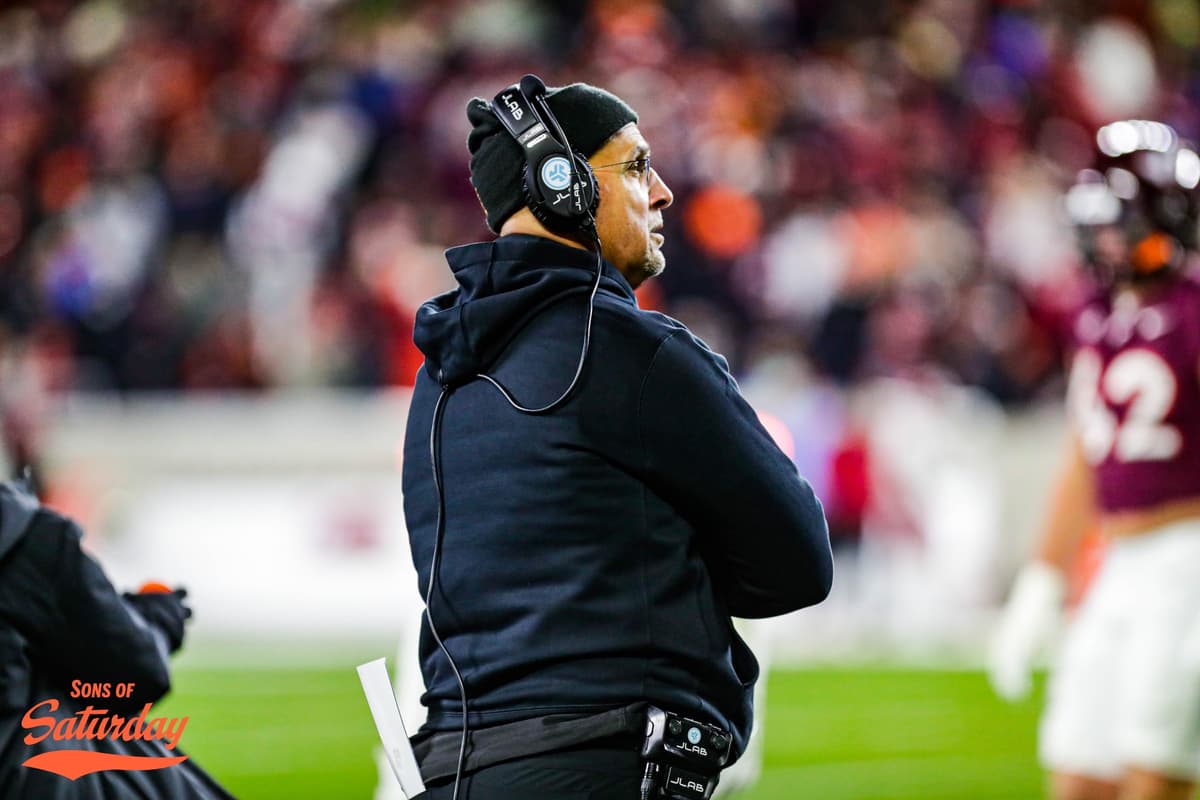
Coach Franklin is a program builder in year one. He'll continue to address talent, depth and culture. (credit: Grant Pearrell)
I’m disappointed in how we played against Stanford. I’m concerned about some of the weaknesses that haven’t improved.
Also, I expect Franklin and his staff to address them. I haven’t changed my mind about the foundation that Coach Franklin is setting. It’s considerably stronger than it was a year ago.
Both of those things can be true.
I don’t feel the same about this loss as I did the losses of the last five years. The reason is that, unlike prior years, I don’t view the loss as a referendum on the state of the program. It turns out it takes more than a year to pull the program out of its decade-and-a-half malaise. The road to success is rarely linear. The test is how we respond to those setbacks, and whether the decisions made along the way leave the program stronger.
That’s what I’ll be watching.

Columnist
My first game as a student was Coach Beamer’s first game as Virginia Tech’s head football coach, I graduated in 1991 and have had season tickets ever since.